The low taper fade is one of the most requested men’s haircuts of 2026, and it is easy to see why. It blends short hair at the neckline into longer hair on top with almost no visible line, giving a clean, professional finish that works in an office, a gym or a wedding. Unlike a skin fade, a low taper does not need weekly touch ups, which makes it a practical choice for busy schedules.
This guide breaks down 55 low taper designs by hair type, texture and top style, then walks through styling, maintenance and the products a barber actually recommends, so you can walk into your next appointment knowing exactly what to ask for.
Low Taper Design Explain?
A low taper fade is a haircut where the hair on the sides and back gradually shortens starting near the ears and the nape of the neck, then blends into longer hair on top. The fade stays low on the head, usually an inch or two above the ear, so there is less exposed scalp and softer contrast than a mid or high fade.
This lower starting point is what separates a taper from a fade in barber terminology. A pure taper trims hair shorter without ever reaching the skin, while a taper fade blends down toward the skin but keeps that transition low and subtle. The result is a versatile base that pairs with almost any top style, from a buzz cut to long, wavy hair, and suits most face shapes because it does not create the harsh contrast a high or skin fade can produce on rounder faces.
Best Low Taper Fade Hairstyles
Every one of these 55 styles uses the same low, gradual fade as its foundation. The difference comes from hair texture, top length and the finishing technique the barber uses, so use this list to find a version that matches your hair type and daily routine.
1. Low Taper Blonde
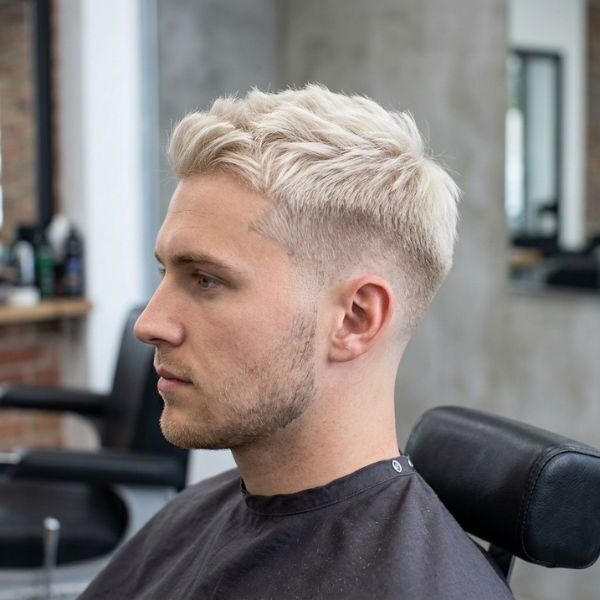
Bleached or dyed blonde hair on top makes the low taper’s soft gradient pop even more. It works best on shorter to medium top lengths and needs a purple shampoo every week or two to stop brassiness.
2. Low Taper with Beard
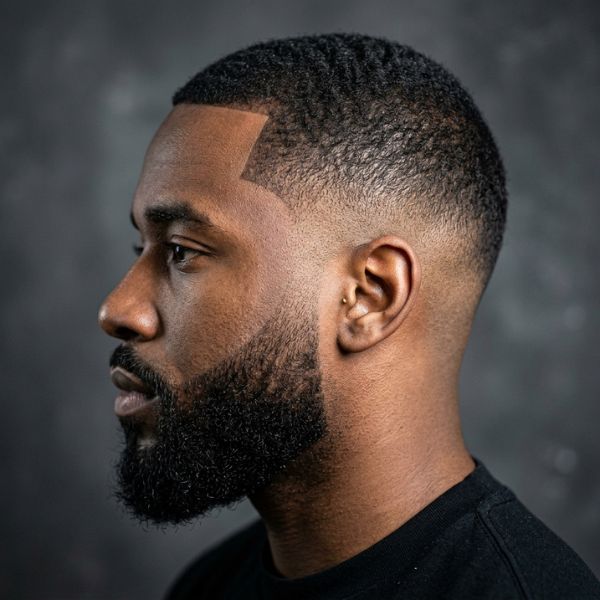
Pairing a low taper with a well groomed beard creates a continuous line from hairline to jaw. Ask your barber to taper the beard into the fade so there is no visible gap at the sideburns.
3. Low Taper Asian

Asian hair is often thick and straight, which holds a low taper’s shape longer than fine hair. A textured crop or brush up on top gives the style movement without fighting the hair’s natural density.
4. Low Taper White
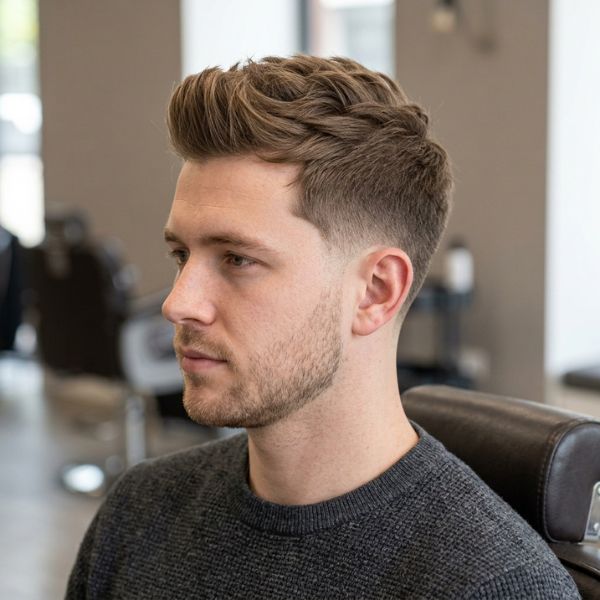
On finer, straighter hair types, a low taper reads as neat and understated. Adding light texture on top with a matte paste keeps it from looking too flat or slicked down.
4. Low Taper Black

On coily or curly hair, a low taper fade highlights natural curl pattern on top while keeping the sides controlled. A curl defining cream or twist out on top pairs well with this base.
5. High Top Low Taper
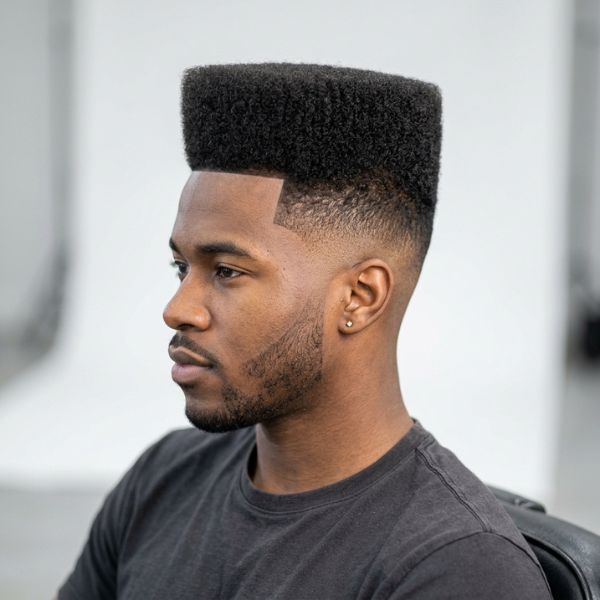
A high top keeps the crown tall and boxy while the sides taper low, creating strong contrast between height and closeness. This style needs firm hold gel and regular trims to keep its shape square.
6. Long Hair Low Taper
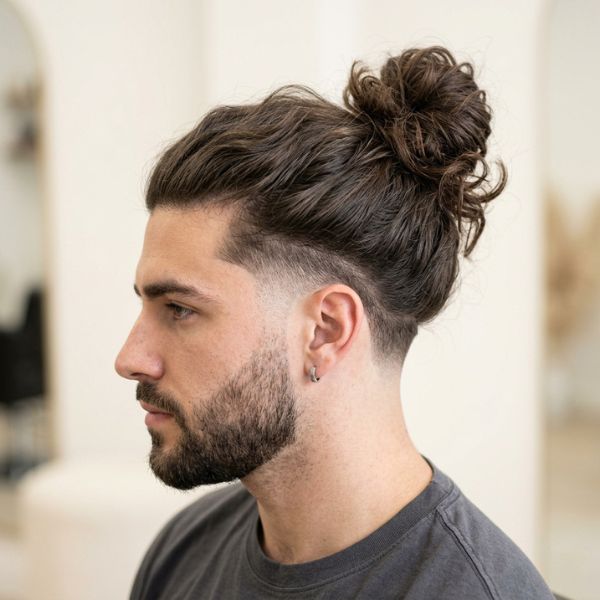
Longer hair on top, often four to six inches, flows over a low taper for a look that reads casual and low maintenance. It works well brushed back or left loose with a light styling cream.
7. Cropped Afro Low Taper
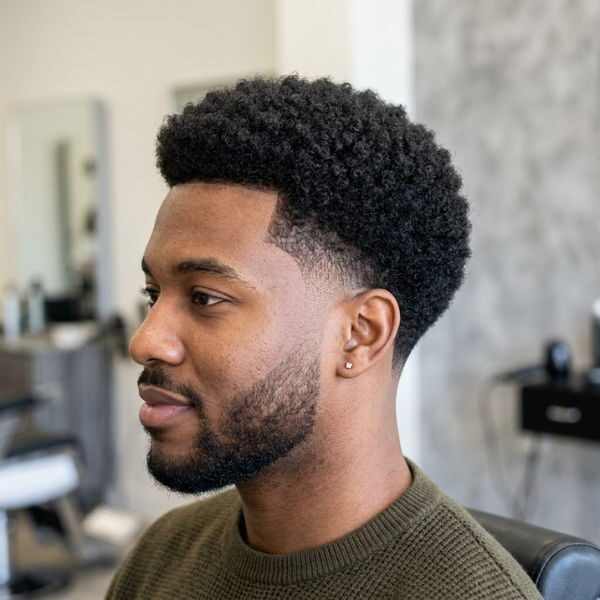
A cropped afro keeps curls short and rounded on top while the sides taper down cleanly. This is one of the lowest maintenance combinations for naturally curly hair and needs minimal daily styling.
8. Classy Low Taper Fade
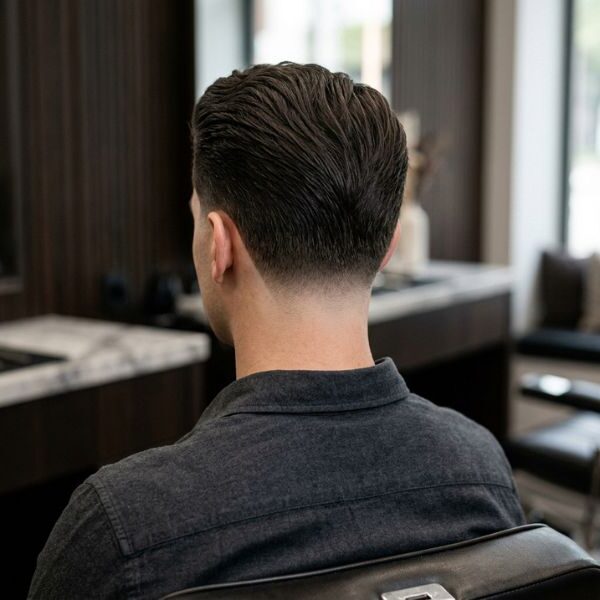
This is the barbershop default, a subtle fade with a side part or comb over on top. It suits formal settings like interviews and weddings because the contrast stays soft and conservative.
9. Short Blonde Waves Low Taper

Short waves on top, sometimes called a 360 wave pattern, combine with a low taper for a textured, disciplined look. A wave brush and durag at night help train the pattern between cuts.
Read more:41 Top Bursts Fade Haircuts in 2026
10. Low Taper Faded Undercut

An undercut takes the sides shorter than a typical taper before blending, giving more contrast under a longer top. It pairs naturally with a brushed back style or a faux hawk shape.
11. Hard Part Low Taper

A hard part is a shaved line separating the top from the side, often used with a comb over. It gives the low taper a sharper, more defined edge that photographs cleanly.
12. Brush Back Taper Fade

Hair on top is brushed straight back using a round brush and blow dryer for volume and shine. This style suits men who want height without heavy product weighing the hair down.
13. Brush Up Low Taper
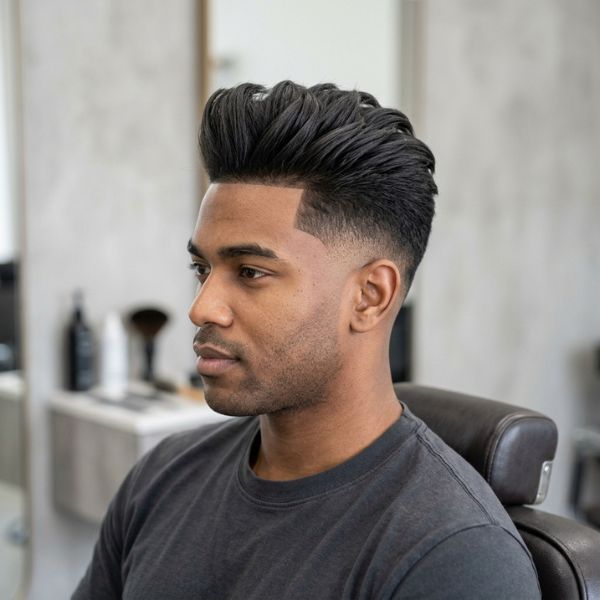
Similar to the brush back but pushed upward instead of backward, giving a fuller, textured crown. A matte clay works better here than pomade since it avoids an overly wet shine.
14. Textured French Low Taper

Choppy, piece-y texture on top combined with a fringe is the hallmark of the French crop, softened by a low taper on the sides. It is currently one of the most requested styles among younger men.
15. Low Taper Back

This refers to keeping the fade consistent around the back of the head, not just the sides, for a fully blended silhouette from every angle. It is worth mentioning specifically to your barber.
16. Low Taper Straight Hair
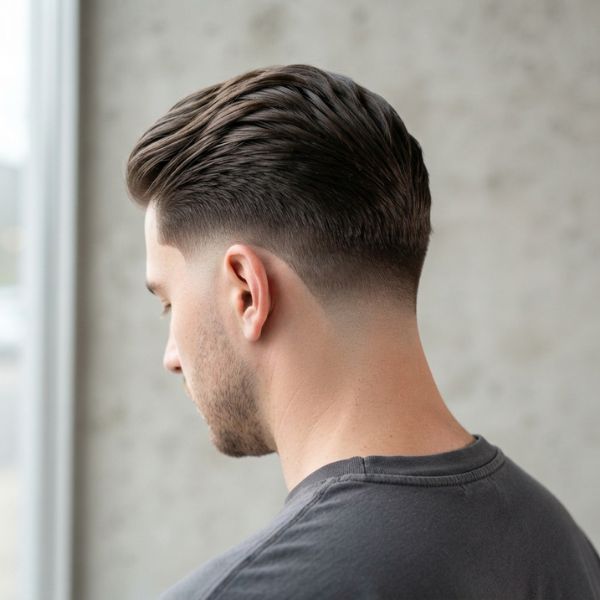
Straight hair shows a low taper’s clean lines especially well since there is no curl pattern to disrupt the gradient. A side part or slick back finishes the look with minimal daily effort.
17. Low Temple Taper Fade

The fade starts right at the temple rather than further back, creating a rounder, softer hairline shape. It suits men with a receding hairline since it draws less attention to the forehead.
18. Low Taper Textured Crop
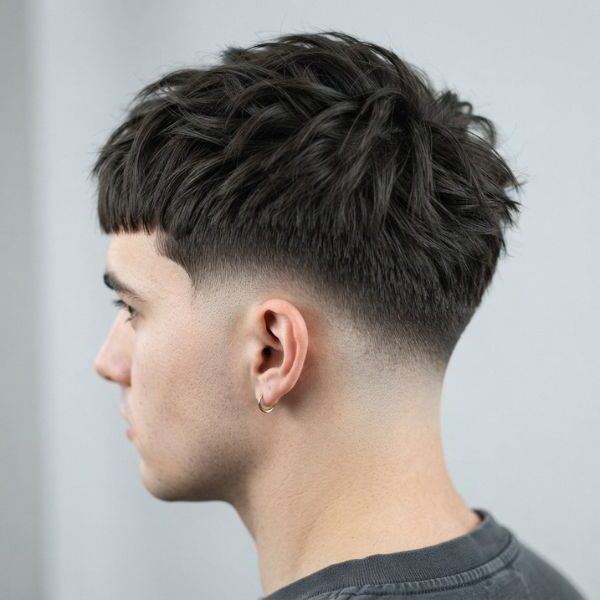
A textured crop keeps the top short with choppy layers cut using point cutting scissors, then blends into the low taper. Sea salt spray adds grip and a matte, lived-in finish.
19. Low Drop Taper Fade
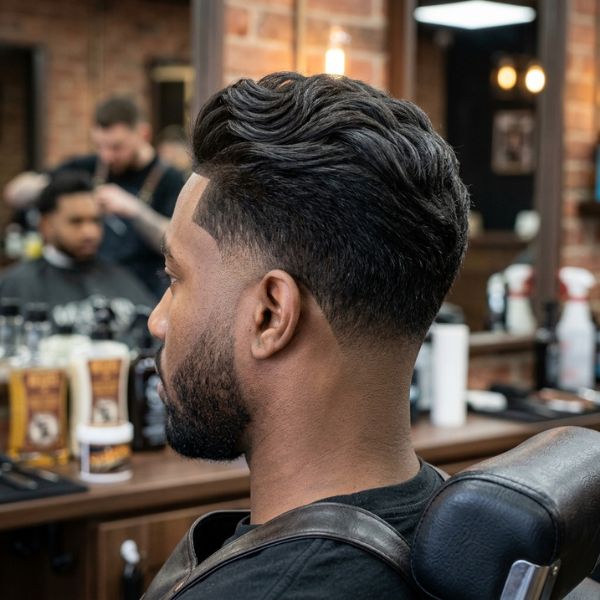
A drop fade curves lower behind the ear before rising again, adding a subtle dip to the usual straight taper line. It works especially well with curly or coily top textures.
20. Low Taper Fade Mullet
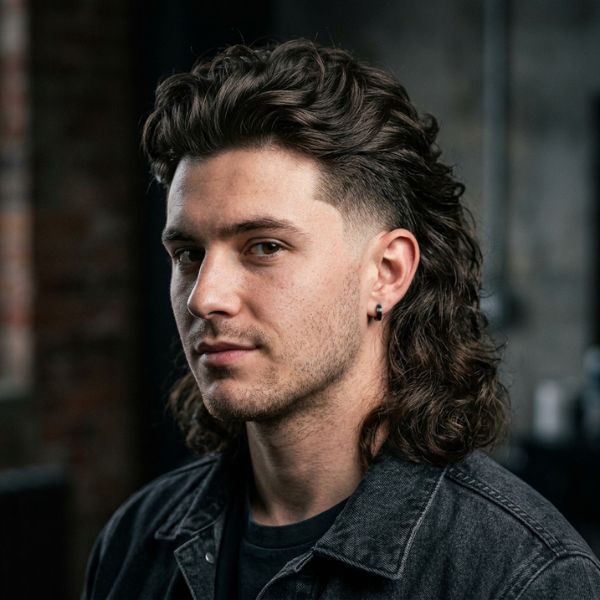
The modern mullet pairs short, tapered sides with longer hair left at the back and crown. It has become a mainstream trend again and suits men who want a bolder statement cut.
21. Low Taper Fade Perm Haircut
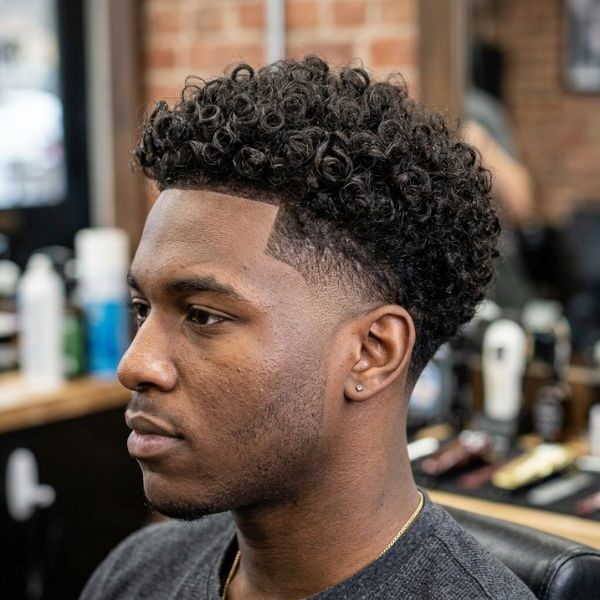
A perm adds curl or wave to naturally straight hair on top, which then contrasts with the tightly faded sides. Perms need chemical maintenance every few months alongside regular fade touch ups.
22. Low Taper Fade Buzz Cut

A uniform buzz cut on top, usually a guard 2 or 3, fades into the low taper for the lowest maintenance option on this list. It suits hot climates and active lifestyles.
23. Low Taper Fade Curly Hair
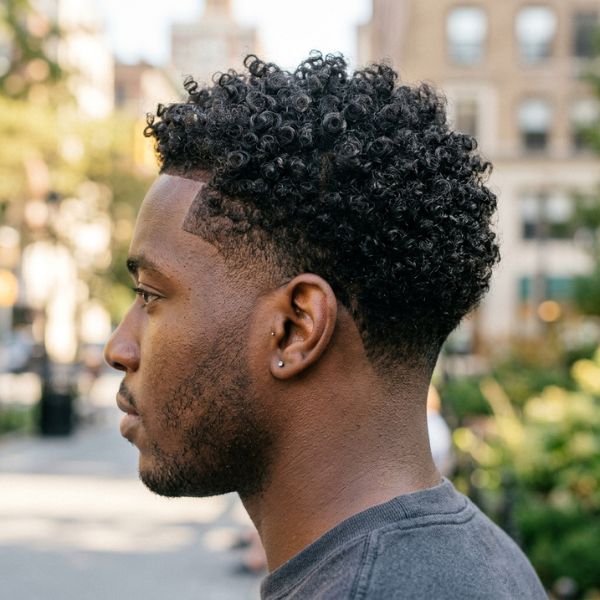
Curly hair on top is left longer to show off natural curl definition, while the low taper keeps the sides from adding bulk. A curl cream applied to damp hair controls frizz.
24. Low Taper Fade Blowout

A blowout uses a round brush and diffuser to push curly or coily hair upward and outward for maximum volume. This bold, rounded shape contrasts sharply with the tight low taper below it.
25. Low Taper Fade Edgar
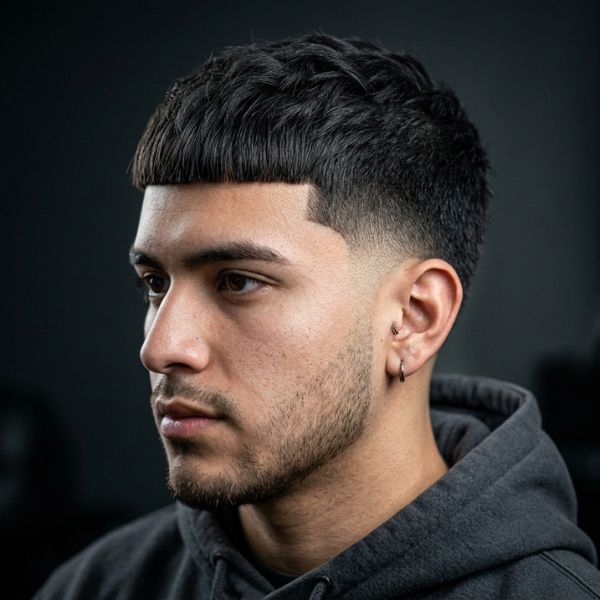
The Edgar cut features a straight, geometric fringe with squared off edges, popularized by younger men and teenagers. Paired with a low taper it looks tidy without being overly formal.
26. Low Taper Fade vs Mid Taper Fade

A low taper starts near the ears while a mid taper starts around the temple, giving noticeably more contrast and a shorter overall silhouette. Mid fades typically need more frequent touch ups.
27. Low Taper Fade vs High Taper Fade

A high taper fade starts near the crown, exposing far more scalp than a low fade and creating a bolder look. High fades also grow out faster and need visits every two weeks.
Read more: Top 27 Trendy Mod Haircut Styles for Men
28. Low Taper Fade Afro

This keeps a fuller, rounder afro shape on top while the sides taper low instead of staying uniform in length. It gives definition to the silhouette without flattening the afro’s natural volume.
29. Low Taper Fade Top Knot

Long hair is tied into a small knot or bun at the crown while the sides fade down low, mixing a traditionally longer style with a modern faded base. It suits men growing out their hair.
30. Low Taper Fade Dreads
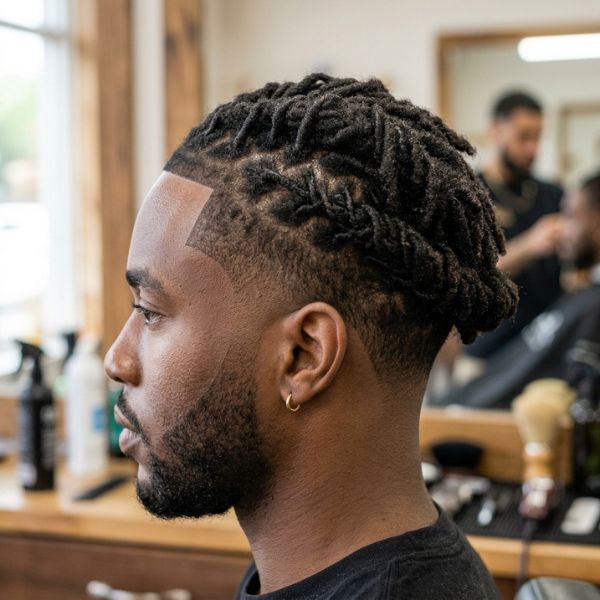
Locs or dreadlocks are left long on top while the low taper cleans up the hairline, sides and neck. This combination is popular because it keeps dreads looking neat without cutting length.
31. Low Taper Twists
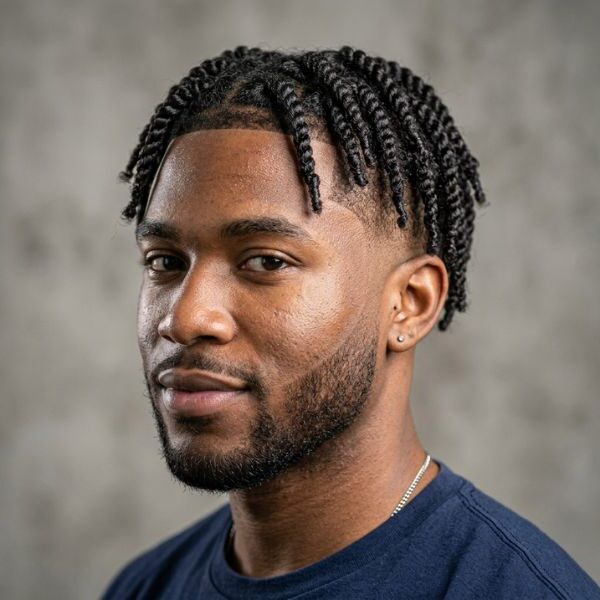
Two strand twists on top pair with a low tapered side for a textured, structured finish. Twists typically need retwisting every two to four weeks to stay defined between fade touch ups.
32. Clean Taper Fade
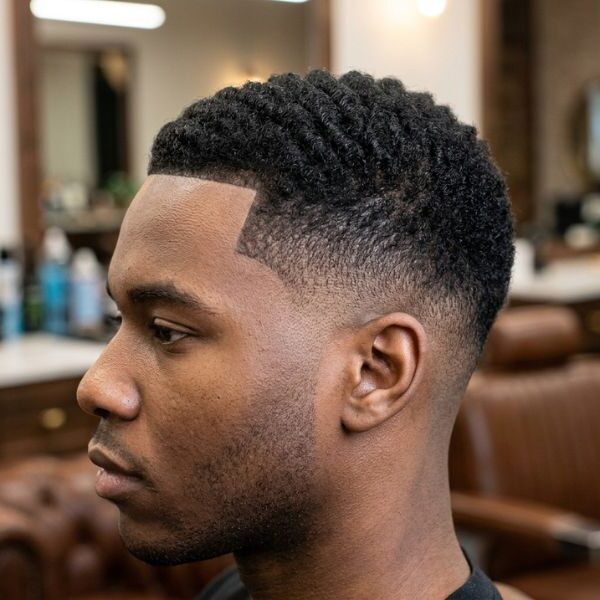
This is the simplest execution of the style, a razor sharp low fade with minimal texture on top, often finished with a straight comb over. It reads as the most formal option on this list.
33. Low Taper Fade Coils

Defined, springy coils are left on top while the sides taper low, showing off natural curl pattern with more definition than a looser afro style. A leave in conditioner keeps coils hydrated.
34. Low Taper Fade Curly Top

Similar to the curly hair variation but styled with more volume and less compression, letting curls sit naturally rather than being combed into a set direction. It suits men avoiding heat styling.
35. Low Taper Fade with Broccoli

The broccoli haircut features tight curls left uncut and untouched on top, resembling broccoli florets, while the low taper handles the sides. It became popular through social media and skateboarding culture.
36. Low Taper with Crew Cut

A crew cut keeps the top short and slightly graduated in length from front to back, then tapers into the sides. It is one of the most classic, low maintenance combinations available.
37. Low Taper Fade Pompadour

A pompadour sweeps hair up and back off the forehead with significant volume and height, contrasting with the closely faded sides. It needs a strong hold pomade and daily blow drying to maintain shape.
38. Low Taper Fade Spiky
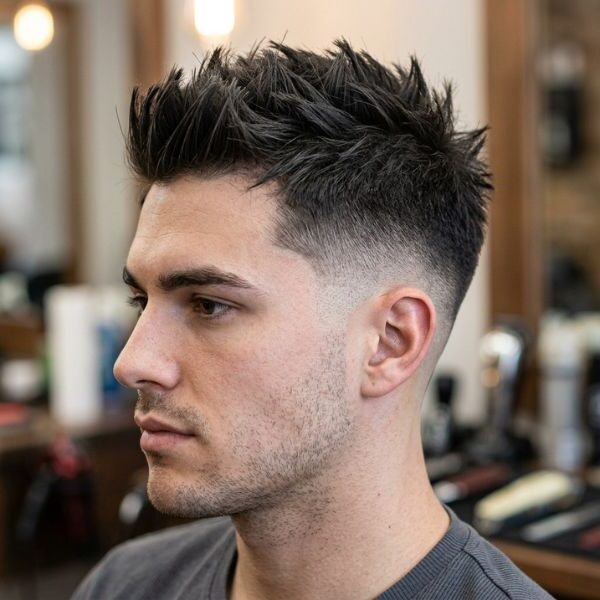
Short, gelled spikes on top add texture and edge above a clean low taper. This style is quick to create with a strong hold wax and works well for a younger, casual look.
39. Low Taper Fade Side Swept

Hair on top is combed to one side rather than straight back, creating a soft, asymmetrical fringe. It pairs naturally with a slight hard part for extra definition along the sweep line.
40. Fringe with Low Taper Fade
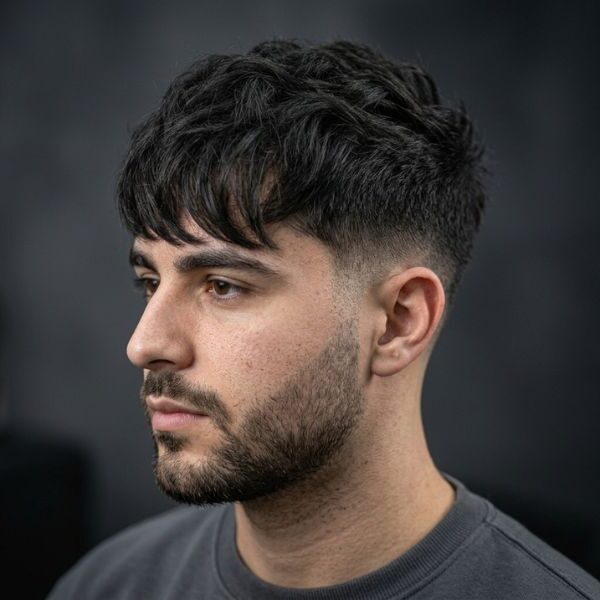
A full fringe falls forward over the forehead instead of being swept to a side, sitting above eyebrow level for a youthful look. It works especially well with straight or lightly textured hair.
41. Textured Crop Taper Fade

A close relative of style 18, this version leans into heavier texture with a slightly longer, choppier top and a scissor-only finish. It is currently one of the top trending cuts among men under 30.
42. Low Taper Middle Part
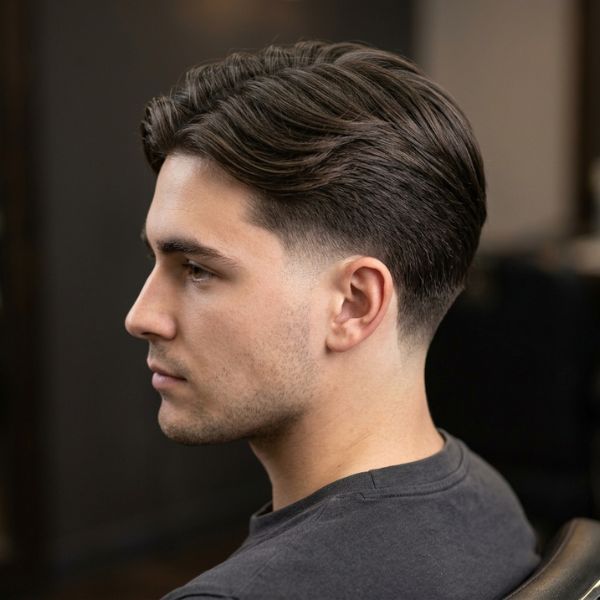
A middle part divides the top into two even sections, a style that returned to popularity from early 2000s fashion. It suits straight to wavy hair and pairs with a subtle low taper.
43. Low Taper Comb Over
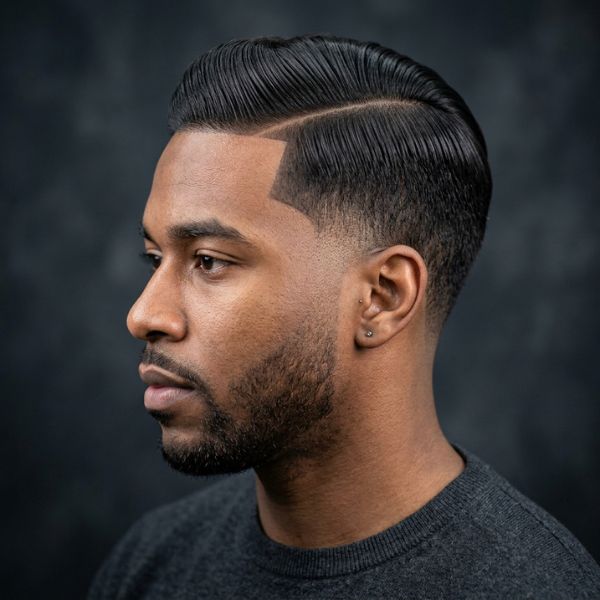
Hair is combed from one side over the top of the head, a classic barbershop request that works for almost any age. The low taper keeps the sides tidy without competing with the comb over.
44. Low Taper Side Part
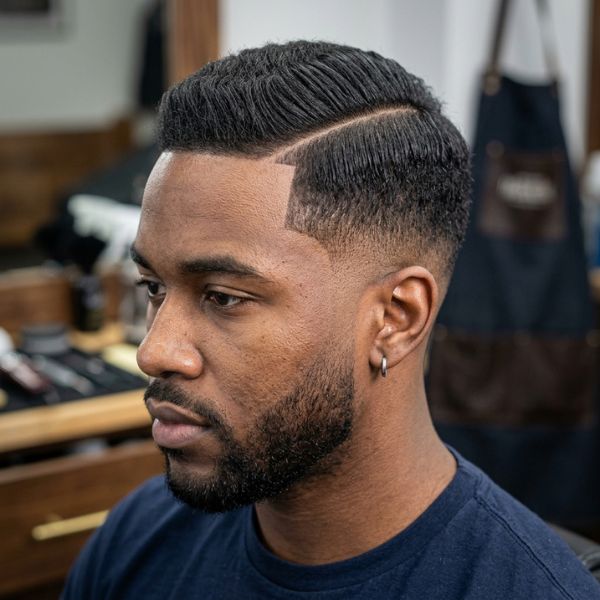
Similar to the comb over but with a defined part line, often cut in with a razor for extra sharpness. It is the safest, most universally flattering option for professional environments.
45. Low Taper French Crop
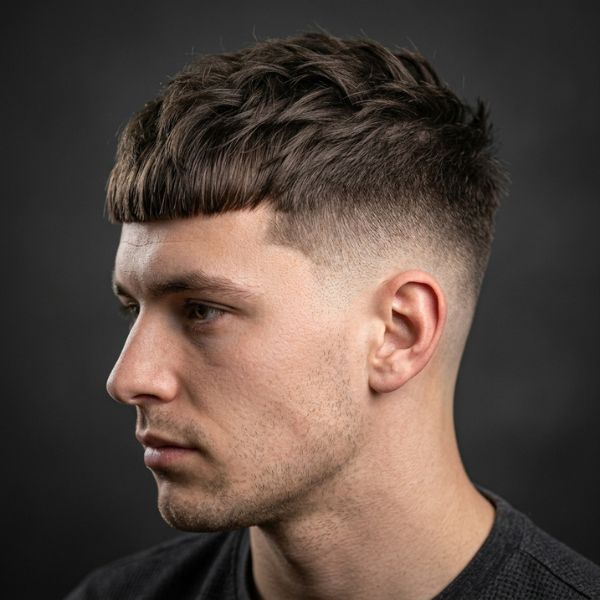
The French crop specifically pairs a short, textured fringe with a low taper, distinct from the textured crop by its emphasis on a blunt, straight fringe line rather than choppy layers.
46. Low Taper Slick Back
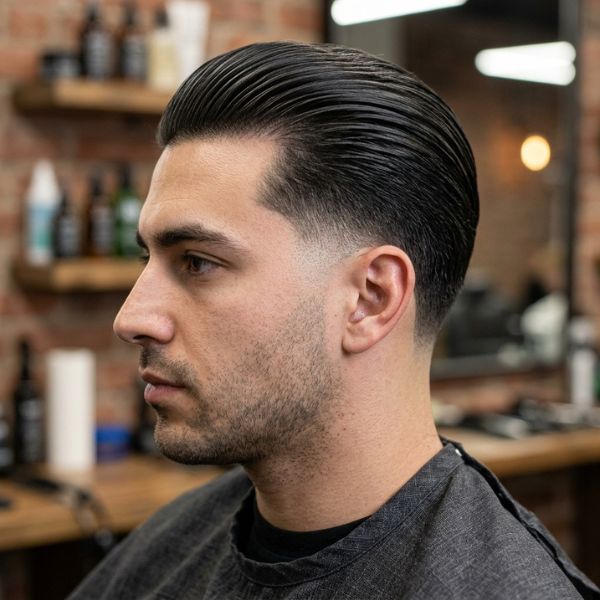
All hair on top is combed straight back and set with pomade or gel for a glossy, controlled finish. It is a timeless look that pairs especially well with a clean shaven face.
47. Low Taper Fluffy Hair

Soft, voluminous hair is left natural on top with minimal product, contrasting with the sharp low taper underneath. It gives a relaxed, youthful appearance that needs very little daily styling effort.
48. Low Taper Wavy Hair
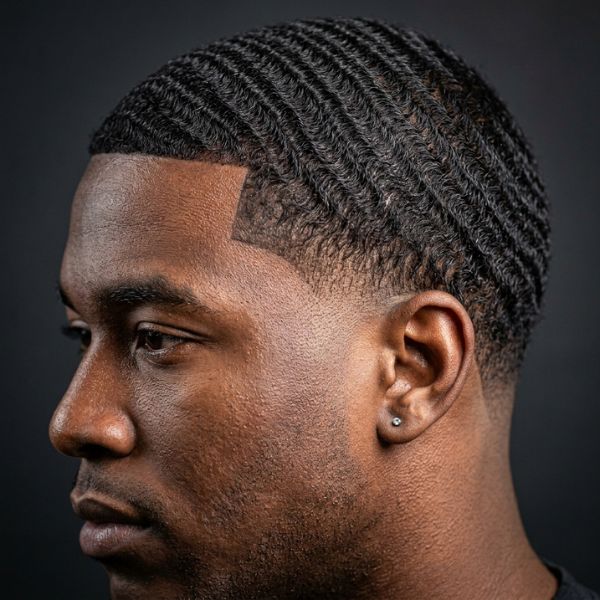
Natural waves are enhanced rather than straightened, often using a wave brush technique, while the low taper keeps the perimeter controlled. This style is popular within 360 wave grooming routines.
49. Low Taper Short Hair

Keeping the top uniformly short, close to a guard 3 or 4, creates one of the lowest maintenance low taper variations. It suits men who prefer minimal daily styling time.
50. Low Taper with Quiff

A quiff lifts hair at the front into a raised, textured peak while the rest lays flatter toward the back. Combined with a low taper, it balances a bold front with a neat base.
51. Low Taper Caesar Cut

The Caesar cut features short, horizontally fringed bangs combed forward, a style associated with a clean, no-fuss aesthetic. A low taper modernizes this classic cut with subtle side contrast.
52. Low Taper Long Top
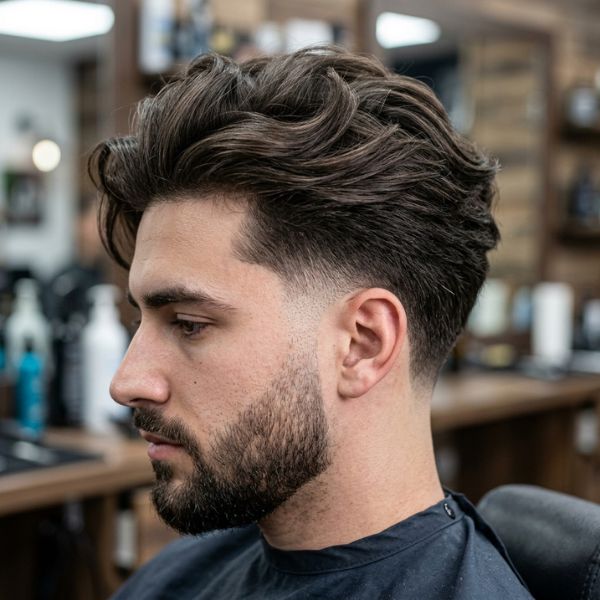
This keeps significantly more length on top than most entries on this list, often five inches or more, while the low taper controls the sides. It suits men transitioning to a longer overall style.
53. Low Taper Short Spikes

Smaller, more controlled spikes than style 38, using a lighter matte product for a subtle textured finish rather than dramatic height. It works well for everyday, low key styling.
54. Low Taper Messy Texture
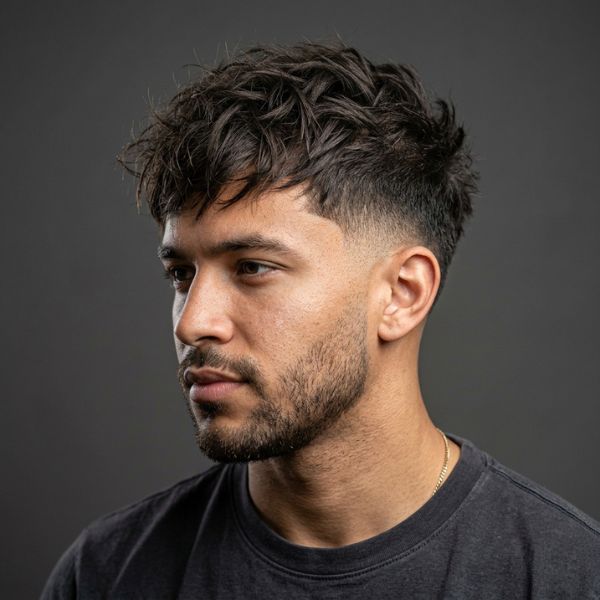
An intentionally undone, tousled finish on top uses a texturizing powder or sea salt spray, while the low taper keeps the overall shape from looking unkempt. It suits a casual, off duty look.
Which Low Taper Design Is Right for You?
The right low taper design depends on three things: hair texture, face shape and how much time you can spend styling daily. Straight and fine hair generally suits sleeker finishes like a slick back or comb over, since a low taper keeps those styles from looking flat. Curly, coily or textured hair pairs better with afro, twist or curly top variations that let natural texture show through the contrast of the fade.
Round faces tend to look more balanced with styles that add height on top, such as a pompadour, quiff or high top, since the low taper alone will not elongate the face the way a higher fade might. Square and oval faces can wear almost any variation on this list comfortably, including softer, low volume options like a crew cut or textured crop. Consider your weekly routine too, since spiky, pompadour and brush back looks demand daily product and heat styling, while buzz cuts, crops and short spikes ask for very little upkeep.
How to Style a Low Taper Fade?
- Start with clean, towel dried hair, since most styling products work best on slightly damp rather than soaking wet hair.
- Apply a small amount of your chosen product, whether cream, paste or pomade, evenly through the top section only, avoiding the faded sides.
- Use a comb or brush to direct the hair into shape, whether that is back, up, to a side or left loose and textured.
- Blow dry on a low or medium heat setting while shaping with a brush if you want volume or height.
- Finish with a light hold spray if the style needs to last through a full day, especially in humid weather.
Styling Options for a Low Taper Fade Haircut
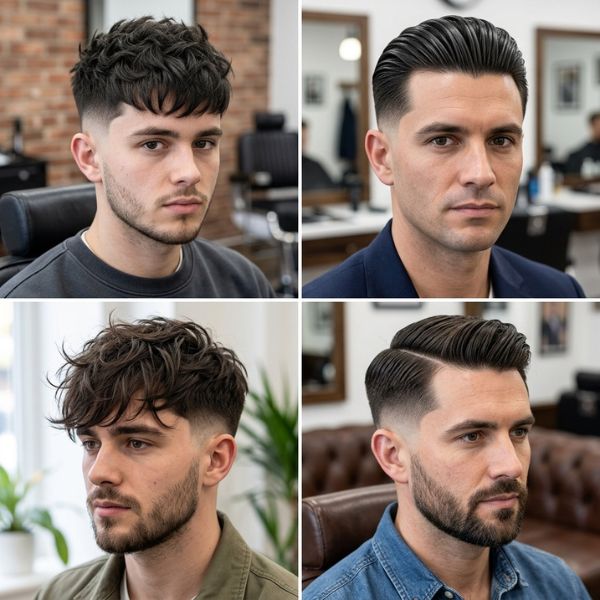
A low taper’s biggest advantage is how many top styles it can support without needing a different fade. The most common options include a textured crop for a natural, undone look, a slick back for formal occasions, a quiff for added height, and curly or twisted styles for men with natural texture. Because the fade itself stays subtle, switching between these looks week to week does not require a new haircut, only a change in product and direction.
Men who want variety without extra barber visits often rotate between two or three of these styles depending on the occasion, using a stronger hold product for events and a lighter cream for everyday wear.
Perfect Low Taper Fade Maintenance
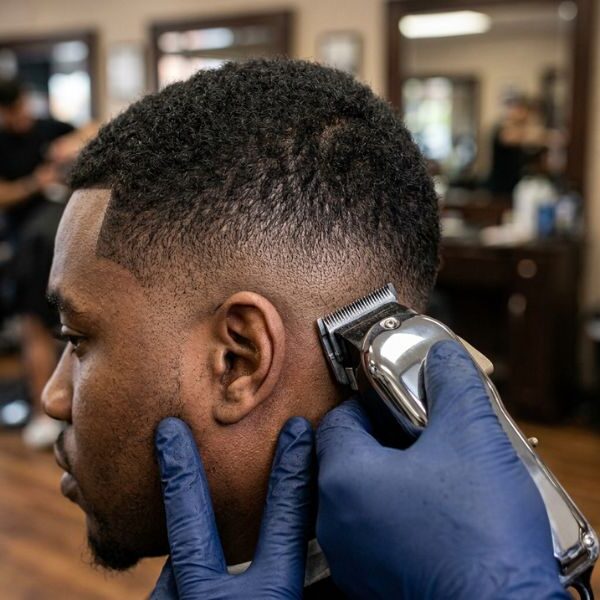
A low taper fade is one of the more forgiving haircuts to maintain because the gradient starts subtle and grows out more evenly than a mid or high fade. According to Highland’s barbering guide, a low taper typically holds its shape for two to three weeks before it needs a professional touch up, and several barbershop guides note that low fades can often stretch to three or four weeks with proper at-home care, compared to the two week window most skin fades require.
Between visits, a few habits keep the cut looking sharp:
- Clean up the neckline and around the ears every five to seven days with a cordless trimmer if you are comfortable doing it yourself.
- Wash with a sulfate free shampoo two to three times a week to prevent scalp buildup that can make the fade look dull.
- Keep the top section moisturized, especially for curly or coily hair, to stop growth from looking messy rather than intentional.
- Book your next appointment before you leave the barbershop so the fade never grows past the point of an easy refresh.
Haircut Requests: Getting It Right
Clear communication with your barber makes the biggest difference between a good low taper and a great one. Bring a reference photo whenever possible, since terms like taper and fade mean slightly different things to different barbers. Specify three details every time: where you want the fade to start, which guard length you want on the sides, and how much length to leave on top.
It also helps to mention your hair type and how much time you spend styling, since a barber can adjust the cut to make daily maintenance easier. For example, asking for more texture on top if you plan to use products daily, or a more uniform length if you prefer to air dry and go. If you are unhappy with any part of a fade, speak up in the chair rather than after, since small adjustments are far easier to make before the cut is finished.
Products for the Perfect Low Taper Fade
1. Round Hair Brush
A round brush adds volume and direction while blow drying, especially useful for brush back and quiff styles. Choose a boar bristle or ceramic barrel depending on your hair’s thickness and heat tolerance.
2. Vent Brush
A vented brush allows air to pass through while detangling and styling, making it ideal for everyday drying without adding excess heat exposure. It works well on straight to wavy hair types.
3. Fine Tooth Comb
Used for precise parts, comb overs and slicked back finishes, a fine tooth comb creates sharp, defined lines that a brush cannot replicate. Metal combs also resist static better than plastic.
4. Hair Styling Cream
A lightweight cream gives natural hold and light shine without stiffness, making it the most versatile everyday product for textured or messy top styles. It works on nearly all hair types.
5. Hair Thickening Spray
This adds body and grip to fine or thinning hair before styling, giving products like pomade or paste more to hold onto. Apply to damp roots before blow drying for the best result.
6. Volumizing Mousse
Mousse is lightweight foam that adds lift and hold without weighing hair down, ideal for curly, wavy or fluffy top styles that need natural looking volume. Apply to damp hair before drying.
7. Hair Paste
Paste offers medium to strong hold with a matte finish, well suited to textured crops, spikes and crew cuts. It is thicker than cream but less stiff than wax or gel.
8. Hair Oil
A few drops of lightweight hair oil add shine and manageability to curly or coily hair on top, and can also soothe a dry scalp around the freshly faded sides. Use sparingly to avoid greasiness.
FAQs
What is a low taper haircut?
A low taper haircut gradually shortens hair on the sides and back starting near the ears, blending into longer hair on top with minimal contrast.
Is low taper fade haram?
No, a low taper fade is not haram. Islamic guidance generally discourages uneven cuts that shave only parts of the head, and a balanced low taper does not fall into that category.
What’s better, mid taper or low taper?
Neither is objectively better. A mid taper gives more contrast and a bolder look, while a low taper offers a subtler, lower maintenance option.
What is a mid-taper fade?
A mid taper fade starts around the temple rather than near the ear, creating more visible contrast and a shorter overall silhouette than a low taper.
Is a low taper fade attractive?
Yes, most barbers and stylists consider it one of the most universally flattering cuts because it suits nearly every face shape and hair texture.
Should I get a low or high fade?
Choose a low fade for a subtler, lower maintenance look, or a high fade if you want bolder contrast and do not mind more frequent touch ups.
Is a low taper or a high taper better?
It depends on personal style and upkeep tolerance. Low tapers last longer between cuts, while high tapers create a sharper, more dramatic silhouette.
Does a low taper suit everyone?
A low taper suits nearly all face shapes and most hair textures, making it one of the safest cuts to request, though very round faces may prefer added height on top.
Conclusion
The low taper fade earns its popularity by being flexible enough for 55 distinct looks while staying low maintenance enough for a busy schedule. Whether you prefer a clean comb over for the office, a textured crop for the weekend, or a bold mullet or top knot for something different, the same reliable fade underneath ties every style together. Bring a reference from this list to your next barber appointment, be specific about guard length and starting point, and keep up with the simple maintenance routine above to make the cut last.

Reyansh is an experienced hair and beauty content writer with a passion for hairstyles, hair care, and the latest styling trends. With years of writing experience, Reyansh creates simple, practical, and engaging content to help readers discover better hair-care routines and fresh style inspiration.