Korean grooming culture has become one of the most searched style categories worldwide, and men everywhere want the same soft, textured look that dominates Seoul streets and K-pop stages. Korean haircut styles stand out because they focus on natural movement, face-framing fringe, and effortless volume instead of harsh, rigid lines.
This guide breaks down the 40 most requested Korean cuts for men in 2026, explains why the trend keeps growing, and shows how to match a style to your face shape. You will also find the exact products barbers use to recreate these looks at home, plus quick answers to the questions people ask most about Korean hair.
Korean Haircut Styles For Mens
Korean men’s hairstyles share a few defining traits: textured tops, soft fringe, and sides that are faded or tapered rather than shaved to the skin. Below are the 40 styles currently shaping men’s grooming trends, from bold statement cuts to low-maintenance classics.
1. Wolf Cut
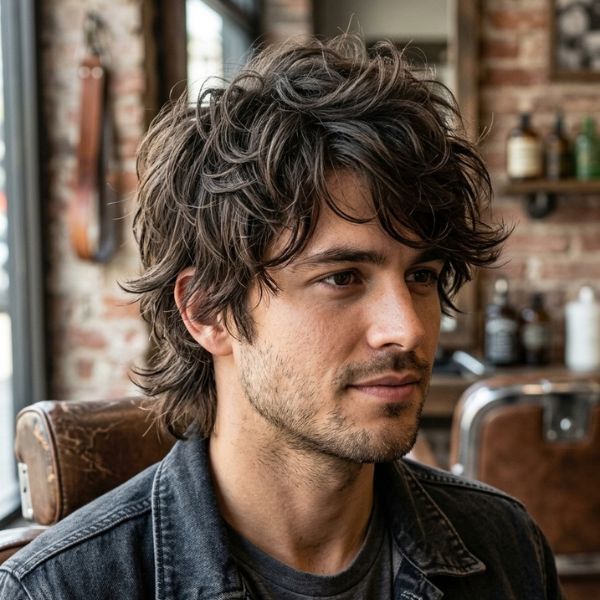
The wolf cut blends a shag with a mullet, using choppy, uneven layers to create volume at the crown and texture at the ends. It suits men who want a rugged, editorial look without heavy styling effort.
2. Mullet
The Korean mullet keeps the top and sides shorter while letting the back grow out into feathery layers. Unlike the retro Western version, this cut leans on soft texture rather than a hard, blunt line.
3. Drop Hair Fade
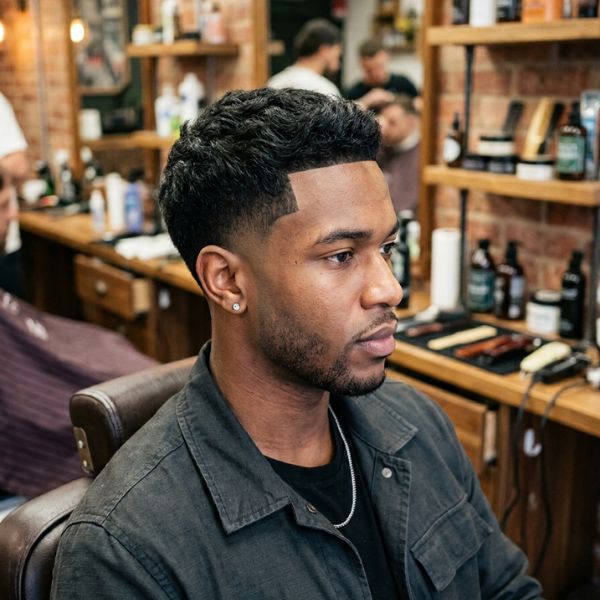
A drop fade curves the fade line downward behind the ear instead of staying straight, following the natural shape of the skull. It pairs well with longer, textured tops for extra contrast.
4. Textured Fringe Hair
This style uses point-cutting techniques to create choppy, piece-y bangs that fall just above the eyebrows. The uneven layers give a lived-in, effortless finish that needs only light product to hold.
5. Comma Hair
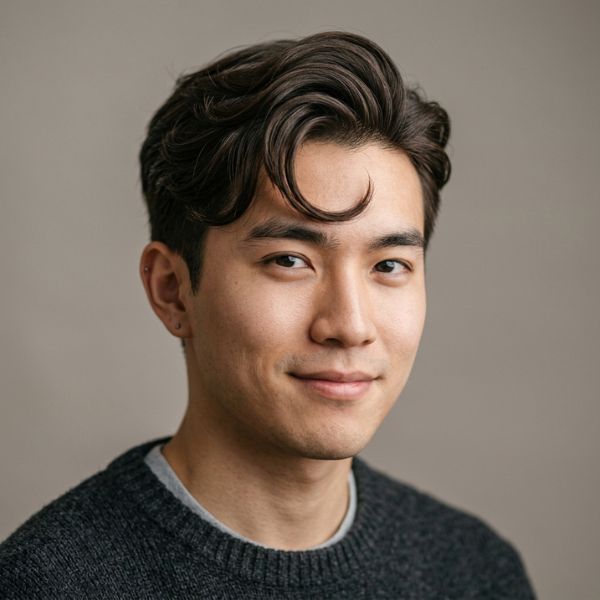
Comma hair features a C-shaped fringe that curves gently to one side, resembling a punctuation comma when styled. It became a global trend after several K-pop idols popularized the look on stage.
6. Middle Part
A center part divides the fringe evenly down the middle, letting both sides fall naturally across the forehead. This cut works especially well on oval and diamond face shapes.
7. Textured Crop Hair
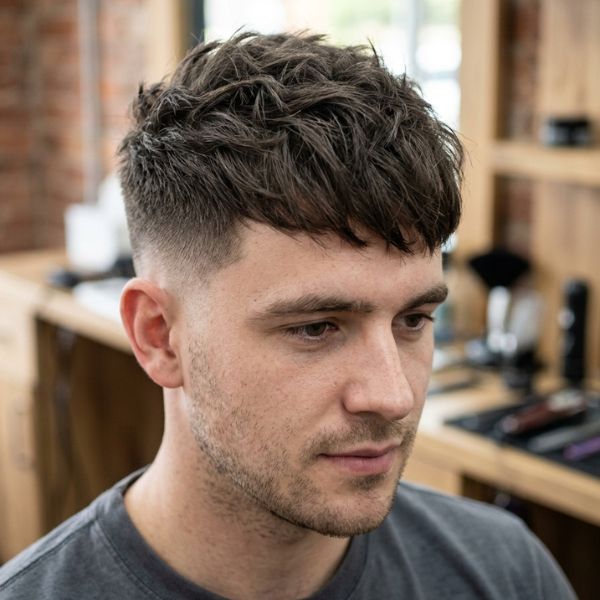
The textured crop keeps hair short on top with heavy texturizing for a rough, matte finish. It is a low-maintenance option that still delivers the choppy silhouette Korean styling is known for.
8. Two Block
Two block is arguably the most requested Korean cut worldwide, pairing short, tightly clipped sides with noticeably longer hair on top. The contrast between the two lengths creates a clean, disconnected shape.
9. S-Shaped Fringe

This fringe curves in an S-pattern across the forehead, combining two directional sweeps for a dynamic, sculpted look. It requires a round brush and light heat styling to hold its shape through the day.
Read more: Top 18 Trending Men’s Old Money Haircuts
10. Caesar Cut
The Korean version of the Caesar cut adds soft texture and a faded side to the traditionally short, forward-combed style. It remains a sharp, low-maintenance option for men who prefer minimal daily styling.
11. Layered Cut
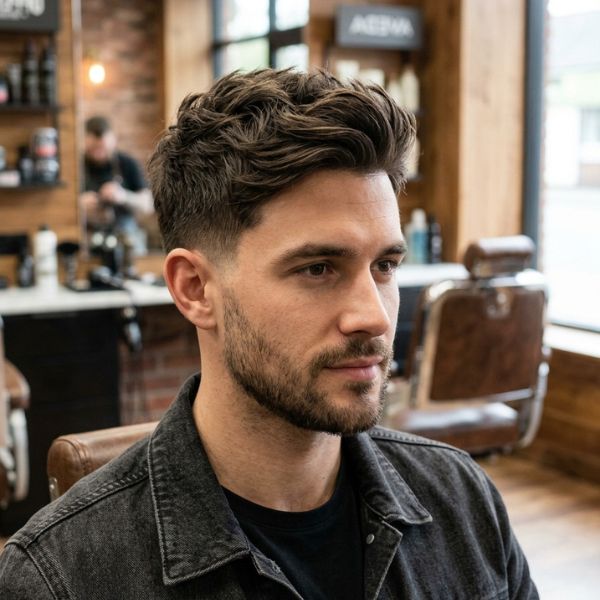
Layered cuts remove weight from thick hair by cutting sections at different lengths throughout. The result is natural movement and bounce without needing constant blow-drying.
12. Bowl Cut
The Korean bowl cut softens the traditional rounded silhouette with textured ends and a center part. It gives a youthful, playful appearance that has become popular among younger trendsetters.
13. Curtain Haircut

Curtain bangs part down the middle and sweep outward on both sides, framing the face like a set of curtains. This cut suits nearly every face shape and is one of the most iconic Korean men’s hairstyles today.
14. Side Bangs
Side bangs sweep the fringe entirely to one direction rather than parting it in the middle. This asymmetrical detail adds a subtle edge to an otherwise clean, tapered cut.
15. Korean Perm

A Korean perm adds soft, loose waves or texture through chemical treatment, giving fine or straight hair natural-looking volume. It is often paired with a two block base for long-lasting shape.
16. Messy Haircut
The messy haircut embraces intentional disarray, using texturizing paste to create separated, undone-looking strands. It offers the appeal of effortless styling while still requiring precise cutting underneath.
17. Side Swept Fringe
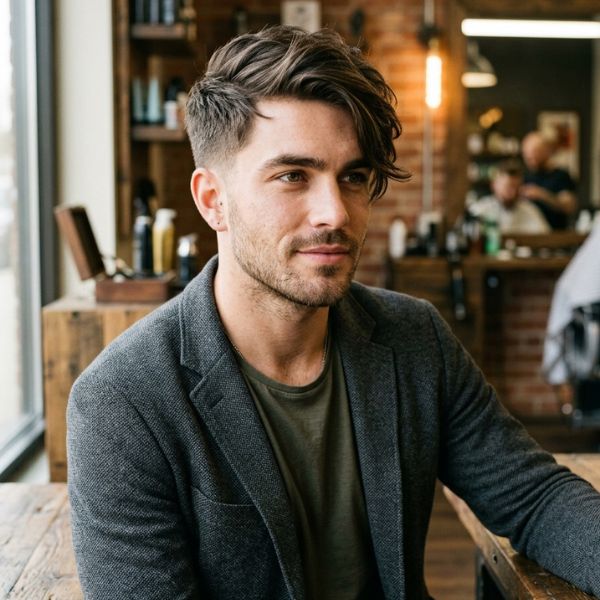
Side swept fringe angles the bangs diagonally across the forehead in one continuous sweep. It softens angular features and works particularly well on square or rectangular face shapes.
18. Tapered Cut
A tapered cut gradually shortens hair from the top down to the neckline without a hard fade line. It offers a subtler, more professional alternative to a sharp fade.
19. Shaggy Cut

The shaggy cut uses heavy layering and texture throughout to create a relaxed, tousled silhouette. It pairs naturally with a light perm for added texture and volume.
20. Long Bangs
Long bangs extend past the eyebrows, often reaching the bridge of the nose for a softer, more dramatic frame. This length requires more frequent trims to maintain its intended shape.
21. Short Korean Haircut
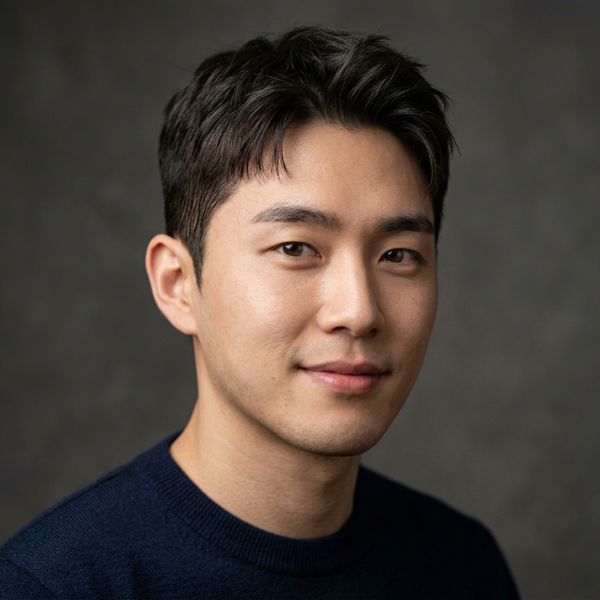
Short Korean cuts favor precision, using sharp angles and clean lines around the ears and neckline. This category includes many of the tapered and cropped styles that need minimal daily maintenance.
22. Bangs with Ponytail
For men with longer hair, pulling the back into a small ponytail while leaving textured bangs loose creates a striking contrast. This style has grown popular through Korean drama and idol fashion.
23. Surfer Cut

The surfer cut combines beachy, tousled waves with a longer top and shorter sides. Sea salt spray is typically used to enhance the natural, wind-swept texture this look relies on.
24. Long Korean Haircut
Long Korean hairstyles use U-shaped layering to keep length while removing bulk, creating cascading movement from mid-length down. Regular deep conditioning helps maintain shine at this length.
25. See Through Bangs

See through bangs are thinned out using a razor or texturizing shears so light passes through the strands. This creates a soft, airy fringe rather than a thick, blunt line.
Read more: 30 Shag Haircuts for Men in 2026
26. Textured Hair
This general category covers any Korean cut finished with heavy texturizing, whether through scissor work, styling cream, or a light perm. The goal is always visible separation between individual sections of hair.
27. Kpop Hairstyle
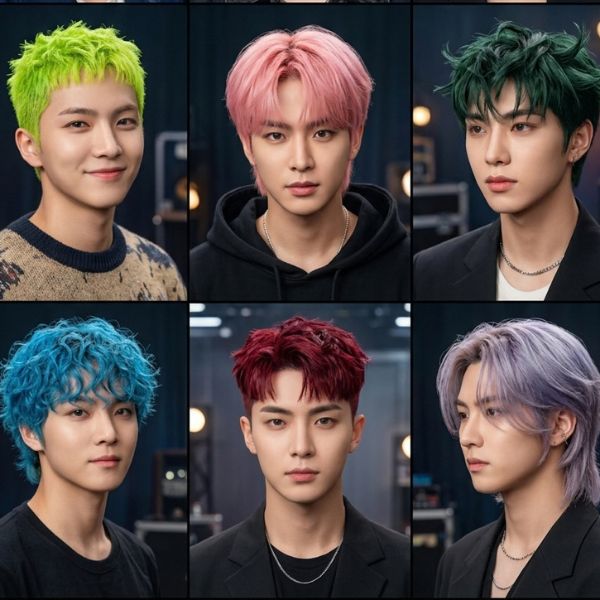
K-pop hairstyles borrow elements from several cuts on this list, often mixing color, volume, and dramatic fringe for stage-ready impact. Idol comeback promotions are the biggest driver of new Korean hair trends each year.
28. Flow Cut
The flow cut lets hair grow naturally backward and to the sides without a defined part, relying on the hair’s own texture for shape. It works best on men with slight natural wave.
29. Korean Undercut
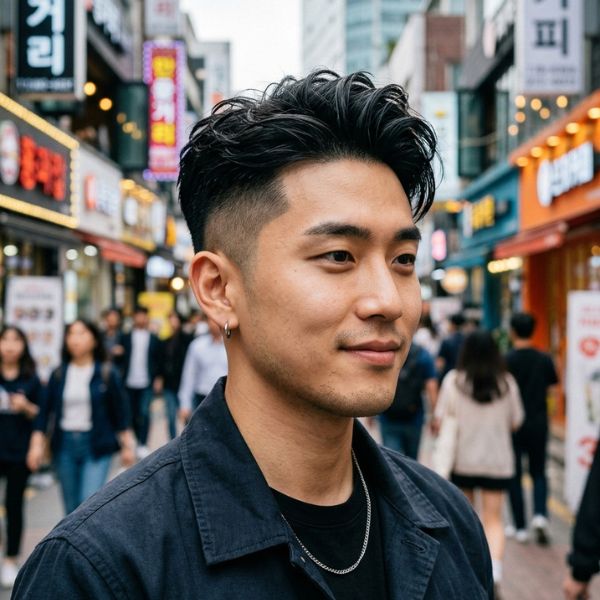
A Korean undercut pairs a disconnected, shaved underside with longer, textured hair on top. The sharp contrast gives a bolder, more streetwear-inspired edge than a standard fade.
30. Dandy Cut
The dandy cut is a polished, side-parted style that blends classic barbering with modern Korean texture. It suits professional settings while still carrying a fashion-forward finish.
31. Natural Flow

Natural flow styling skips heavy product in favor of letting layered hair fall exactly where it naturally wants to sit. Getting the right layering during the cut is essential for this low-effort finish to work.
32. Korean Curly Hair
This style enhances natural curls or a loose perm with lightweight curl cream, avoiding heavy gel that can weigh curls down. It pairs well with shorter sides for balance.
33. Korean Medium Hairstyle
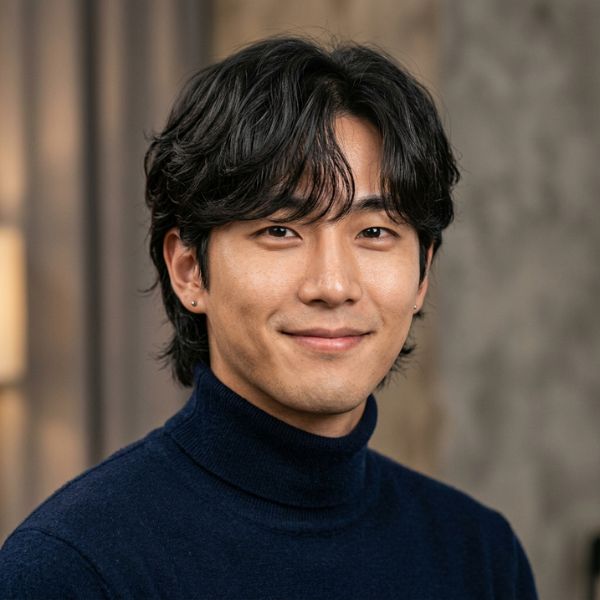
Medium-length Korean cuts sit between short crops and long, shoulder-grazing styles, offering flexibility for both slicked-back and textured-fringe looks. This length is popular because it can be restyled several different ways between trims.
34. Leaf Perm
The leaf perm creates soft, rounded curls that mimic the shape of overlapping leaves, concentrated mostly at the mid-lengths and ends. It gives fine, straight hair noticeable volume without looking overly curly.
35. Wavy Korean Hair
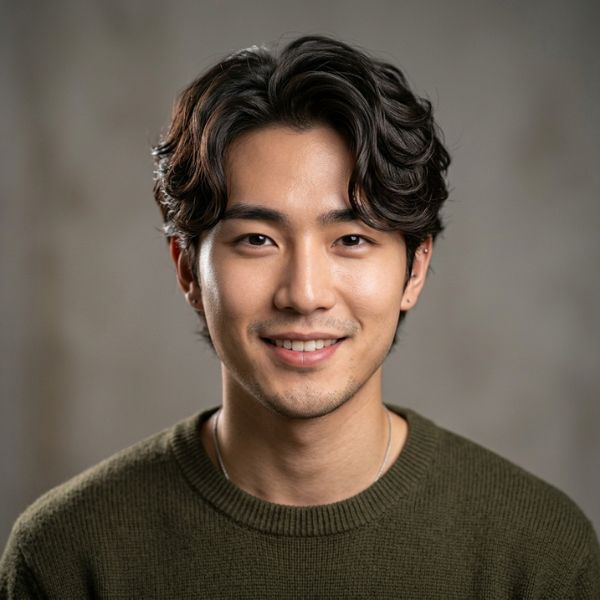
Wavy Korean styles use a light perm or heat styling to add gentle S-shaped waves throughout the top section. The waves are kept loose and natural rather than tight or uniform.
36. Ivy League Cut
A Korean take on the Ivy League cut keeps the classic short, tapered silhouette but adds textured, piece-y styling on top. It remains one of the most versatile options for formal and casual settings alike.
37. Down Perm
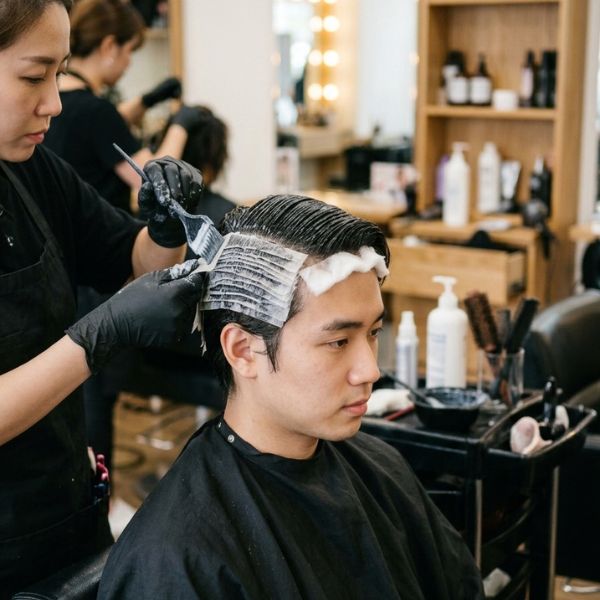
A down perm uses a specific rod-and-curl technique to push hair downward and inward rather than outward, taming frizz and adding controlled shape. It is especially popular for men with thick or unruly hair.
38. Spin Swallow Perm
The spin swallow perm creates a rounded, swirled volume pattern at the crown, resembling a swallow’s tail from certain angles. It is often combined with a fringe for a fuller, more dramatic top section.
39. Two-Block Haircut
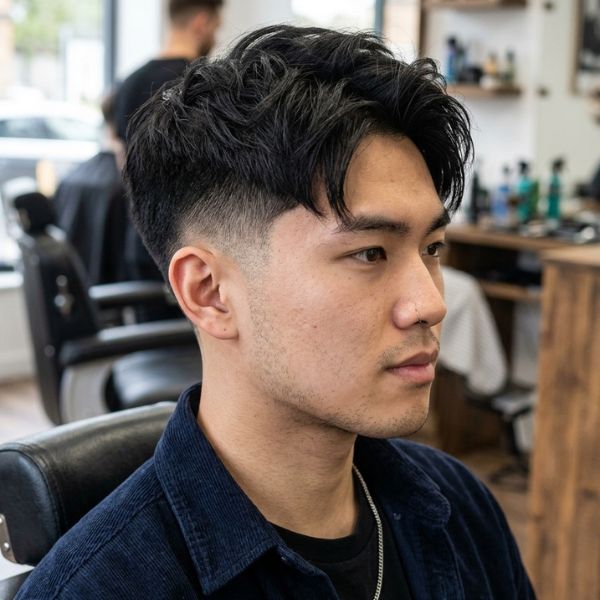
This variation of the two block trend focuses on an even sharper disconnection between the short sides and the long top, often finished with a straight or blunt fringe. It remains a salon staple across South Korea.
40. Off-Centered Part Haircut
An off-centered part sits slightly to one side rather than dead center, creating asymmetry that suits rounder face shapes. It offers a middle ground between a full side part and a symmetrical center part.
Why Korean Hairstyles Are So Famous?
Korean hairstyles gained global popularity largely through the Hallyu wave, the spread of Korean entertainment including K-pop, K-dramas, and Korean beauty content across international audiences. Idols and actors are often the first to debut a new cut, and fans quickly request the same style at their local barbershops.
Beyond celebrity influence, these cuts succeed because they prioritize texture and natural movement over rigid, one-size-fits-all shapes. Korean barbers typically customize layering and fringe length to each client’s hair type, which is why the same base cut can look different from person to person. Social media has accelerated this further, with short tutorial clips making these styles easy to reference and request anywhere in the world.
Read more: Top 61 Middle Partition Haircut Styles For Men in 2026
How to Choose a Korean Hairstyle According to Face Shape?
| Face Shape | Recommended Styles | Why It Works |
|---|---|---|
| Round | Two Block, Textured Crop | Adds height on top to elongate the face |
| Square | Curtain Haircut, Side Swept Fringe | Softens strong jawlines with rounded fringe |
| Oval | Middle Part, Comma Hair | Balanced proportions suit almost any layering |
| Diamond | Curtain Haircut, Middle Part | Adds width near the cheekbones |
| Long or Oblong | Fringe styles, Layered Cut | Shorter crown height keeps proportions even |
| Heart | Side Bangs, Textured Fringe | Draws attention away from a wider forehead |
Products to Master These Korean-Inspired Hairstyles
Achieving the soft, textured finish seen in most Korean haircuts depends heavily on using the right styling products rather than heavy, stiff-hold formulas.
1. Hair Clay
Hair clay offers a matte, low-shine finish with strong hold, making it ideal for textured crops and messy haircuts that need definition without gloss.
2. Texture Powder
Texture powder adds instant volume at the roots and grip between strands, which is especially useful for fine hair struggling to hold a fringe in place.
3. Hair Paste
Hair paste provides medium hold with a slightly glossy finish, working well for comma hair and curtain bangs that need light control.
4. Sea Salt Spray
Sea salt spray enhances natural texture and creates a tousled, beachy finish, making it a go-to product for surfer cuts and shaggy styles.
5. Hair Styling Cream
Styling cream smooths flyaways while adding light hold, which suits natural flow and dandy cut looks that rely on a soft, controlled finish.
7. Pomade
Pomade delivers a sleek, shiny finish and firm hold, commonly used for Ivy League cuts and other more polished, side-parted styles.
8. Round Hair Brush
A round brush is essential for blow-drying curtain bangs and S-shaped fringe, since it shapes the hair as heat sets the style in place.
9. Fine Tooth Comb
A fine tooth comb helps create precise, sharp partings for styles like the middle part or off-centered part haircut, ensuring a clean separation line.
Korean haircuts continue to evolve every season, but the underlying principle stays the same: soft texture, thoughtful fringe placement, and a cut tailored to individual hair type and face shape.
Whether you want a bold wolf cut or a low-maintenance Caesar cut, working with a barber who understands Korean layering techniques will make the biggest difference in how the final result looks and holds up between trims.
FAQ’s
Why is Korean hair so good?
Korean hairstyles focus on personalized layering and texture rather than one universal shape, which allows the same cut to flatter many different face shapes and hair types.
Is Korean hair thick or thin?
Korean hair is generally thick and straight, though barbers use thinning shears and texturizing techniques to reduce bulk and create the soft, layered look seen in most styles.
What is a Korean 2 in 1 cut?
A Korean 2 in 1 cut combines two different lengths in a single haircut, typically an undercut base with longer, textured hair left on top.
Is a haircut in Korea expensive?
Haircuts in Korea are generally affordable, with men’s cuts often costing the equivalent of a modest amount at local salons compared to premium salon prices in Western countries.
What is the viral Korean haircut?
The wolf cut and two block haircut have both gone viral repeatedly on social media, thanks to their frequent use by K-pop idols and their versatility across hair types.

Reyansh is an experienced hair and beauty content writer with a passion for hairstyles, hair care, and the latest styling trends. With years of writing experience, Reyansh creates simple, practical, and engaging content to help readers discover better hair-care routines and fresh style inspiration.